
What Is a Futon? Mattress, Frame and History
Understanding Futons: The Mattress, Frame, and History
A futon is a traditional Japanese bedding system that has been adapted worldwide as a versatile, space-saving piece of furniture. It typically consists of a mattress placed on a foldable frame, allowing it to function as both a sofa and a bed.
The Japanese Roots of the Futon
To truly understand what a futon is, you have to look at its origins. The word “futon” comes from the Japanese words “futon” (bedding) and “shikibuton” (the mattress part). In Japan, this was not a piece of furniture but a set of bedding kept in a closet.
Traditionally, a Japanese futon includes three elements: a shikibuton (the thin mattress that goes on the floor), a kakebuton (a comforter or blanket), and a makura (a pillow). The rooms in traditional Japanese homes were multi-purpose, so the futon would be laid out at night and put away during the day.
This design was deeply practical for small living spaces. Research and found that this practice is linked to the Japanese cultural value of maximizing space and maintaining a clean, uncluttered environment. When futons came to the United States and Europe in the 20th century, the concept changed. People wanted a piece of furniture that could transform, not bedding they had to store daily.
The Three Core Parts of a Modern Futon
Today, when you shop for a futon, you’re really shopping for two main components that work together. Understanding these parts is key to finding the right one for your home.
The Futon Mattress
The mattress is the cushioning part you lie or sit on. Unlike a traditional sofa cushion, it’s designed to fold. Futon mattresses are usually thicker than a Japanese shikibuton but thinner than a standard mattress. They often have a cotton or foam core and are covered in a durable fabric.
Common Futon Mattress Fillings
- Cotton: Traditional and breathable, but it can compress over time.
- Polyester Foam: Lightweight, affordable, and holds its shape well.
- Memory Foam: Offers more contouring support, similar to a modern mattress.
- Innerspring or Hybrid: Provides the most support, similar to a regular bed mattress, but is heavier and less flexible.
You might wonder, “Is a futon mattress actually good for sleeping?” We found that it depends heavily on the mattress quality. A cheap, thin one is fine for occasional guests. For daily use, experts recommend a thicker mattress (at least 6-8 inches) with supportive fillings like foam or springs to protect your back and joints (National Sleep Foundation).
The Futon Frame
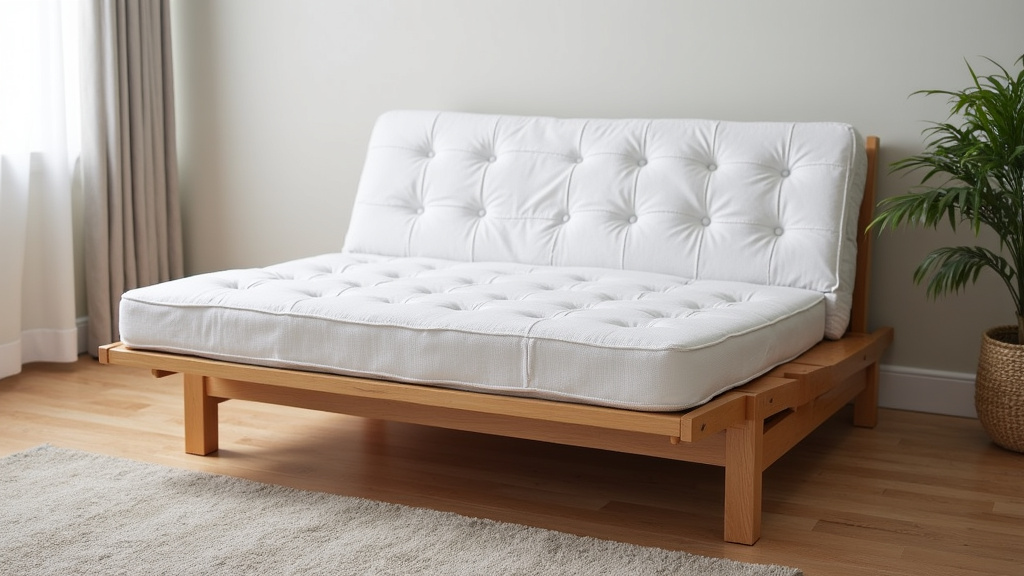
The frame is the skeleton of your futon. It’s the mechanical part that allows it to convert from a sofa to a bed and back again. Frames are typically made of wood or metal. Wood frames are often more stylish and sturdy, while metal frames can be more affordable and lightweight.
The mechanism is what matters most. There are two main types: the bifold and the click-clack.
- A bifold frame folds in half, like a book. The seat becomes the back, and you’re left with a full bed. This is the most common type.
- A click-clack frame has a backrest that clicks into different angles. You can make it flat for a bed, but also set it at an upright angle for seating. It’s great for watching TV.
Always check the frame’s weight limit and the ease of conversion before you buy. A good frame should feel stable in both positions, not wobbly.
How a Futon Compares to a Sofa Bed
You might be thinking, “Isn’t this just a sofa bed?” It’s a common question. While they serve a similar purpose, there are key differences. A sofa bed typically uses a thin, folding metal mattress hidden inside a standard sofa frame. A futon is a simpler system with the mattress always visible on a transforming frame.
| Feature | Futon | Traditional Sofa Bed |
|---|---|---|
| Design | Frame and mattress are a single, coordinated set. | Mattress is hidden inside a bulky sofa frame. |
| Mattress Thickness | Usually thicker (4-10 inches). | Often thinner (3-6 inches) to fold away. |
| Comfort for Sitting | Firmer, like a firm couch. | Softer, with deeper cushioning. |
| Comfort for Sleeping | Can be very good with a quality mattress. | Often less comfortable due to the thin mattress. |
| Price Point | Generally more affordable. | Can be more expensive due to complex mechanisms. |
| Style | Casual, minimalist, modern. | Looks like a traditional sofa. |
Essentially, a futon offers a dedicated sleeping surface at a lower price, while a sofa bed prioritizes the look of a regular sofa. Your choice depends on whether you value the sleeping experience or the living room aesthetics more.
Types of Futon Frames to Fit Your Space
The frame isn’t just about mechanism; it’s about how it fits into your room. You have two primary categories to consider.
Freestanding Futon Frames
These are the standard, standalone pieces. They come in various styles, from classic wood frames to sleek metal designs. They require floor space and can be moved around easily. A freestanding futon is perfect if you want to place it in the middle of a room or move it between spaces.
Futon Bunk Beds and Loft Beds
For ultimate space-saving, consider a futon bunk bed. This combines a standard bed on top with a futon on the bottom. It’s a fantastic solution for a teenager’s room, a dorm, or a guest room that doubles as an office. You get two separate sleeping surfaces in the footprint of one. We’ve seen this be a popular choice for families who need flexible sleeping arrangements.
Futon Styles: More Than Just Wood and Metal
The term “futon” has broadened. Today, you’ll find a style to match almost any decor.
The Minimalist Japanese Futon
Purists still use the traditional floor-based system. This involves a high-quality, firm shikibuton placed directly on a tatami mat or a clean, carpeted floor. It’s the most affordable and space-saving option, but it’s not for everyone. Sleeping on the floor isn’t recommended if you have significant joint pain or mobility issues.
The Western-Style Convertible Futon
This is what most people picture: a frame with a mattress that converts. Styles range from the simple, platform-style wooden frames to more upholstered versions that look like a proper couch when in the sitting position. An upholstered futon can make the piece feel more integrated into a living room setting.
How to Choose the Right Futon for You
Feeling ready to shop? Keep these key considerations in your mind. Ask yourself these questions before making a purchase.
- What’s its primary job? Is it for daily sleeping, occasional guests, or just extra seating? This will decide the mattress quality you need.
- How much space do you have? Measure your room. Don’t forget you need space for it to fold out into a bed.
- Who will use it? A daily sleeper needs more support. A child’s room might do fine with a simpler model.
- What’s your decor style? There’s a futon frame in wood, metal, or fabric to match a rustic, modern, or minimalist room.
- What’s your budget? You can find basic sets for a few hundred dollars or high-quality, designer futons for over a thousand.
A Quick Checklist for Your Futon Hunt
Use this simple list when you’re shopping or reading reviews.
- ✔ Mattress Thickness: Is it at least 6 inches for daily use?
- ✔ Frame Sturdiness: Does it feel wobbly? Check the weight limit.
- ✔ Conversion Ease: Can one person easily change it from sofa to bed?
- ✔ Mattress Cover: Is it removable and washable? (This is a huge plus for cleanliness.)
- ✔ User Reviews: What do real people say about comfort after six months of use?
Caring for Your Futon
To make your futon last, a little care goes a long way. For the mattress, rotate it head-to-foot every few months to ensure even wear. If the cover is removable, wash it regularly according to the tag’s instructions. For the frame, periodically check and tighten any screws or bolts that may have loosened with use.
We recommend using a mattress protector from day one. It will shield the futon from spills, dust, and allergens, keeping it fresh and extending its life. Air it out occasionally by opening a window in the room, especially if it’s been folded up for a while.
From its simple origins on Japanese floors to its modern role as a versatile furniture hero, the futon remains a practical and affordable solution. It’s about smart living, whether you’re furnishing a first apartment, a guest room, or a cozy den. By understanding its parts and history, you can choose a futon that truly works for your life.
Conclusion
You now understand what a futon is, from its Japanese roots to the modern mattress and frame system. The key takeaway is that a futon is a versatile, space-saving solution. Your choice of mattress and frame determines its comfort and function. For daily sleeping, invest in a thicker, supportive mattress. For occasional use, a simpler model can work well. We encourage you to use the checklist from our guide during your search. This will help you find a reliable, comfortable futon that fits your space and budget perfectly. Your next step is to measure your room and decide on your primary need before you shop.
Frequently Asked Questions
Can a futon be used as a daily bed?
Yes, but quality matters. We found that a futon with a thick, supportive mattress of at least 6-8 inches is essential for daily sleep. A thin, inexpensive model may cause back discomfort over time. Always check reviews for long-term comfort reports.
How much space do I need for a futon?
You need space for the futon in both positions. Measure your room to ensure there is enough clearance for the frame to fold out into a bed. A standard full-size futon needs about 40-50 square feet of floor space when fully extended.
What is the difference between a futon and a Murphy bed?
A futon is a sofa that converts into a bed, usually by folding a frame and mattress. A Murphy bed is a bed that folds up vertically into a cabinet or wall unit. Futons are more about flexible seating, while Murphy beds save space by hiding the bed completely.
Are futon mattresses good for people with back pain?
Some are, but not all. Our research indicates that a high-quality futon with memory foam or innerspring support can be good. The key is choosing a thicker mattress (at least 6 inches) that provides firm, even support to keep your spine aligned.
How long does a typical futon last?
A well-maintained futon can last 5-10 years. The lifespan depends on the mattress quality, frame sturdiness, and how often it’s used. Rotating the mattress, using a protector, and tightening frame hardware will help it last much longer.