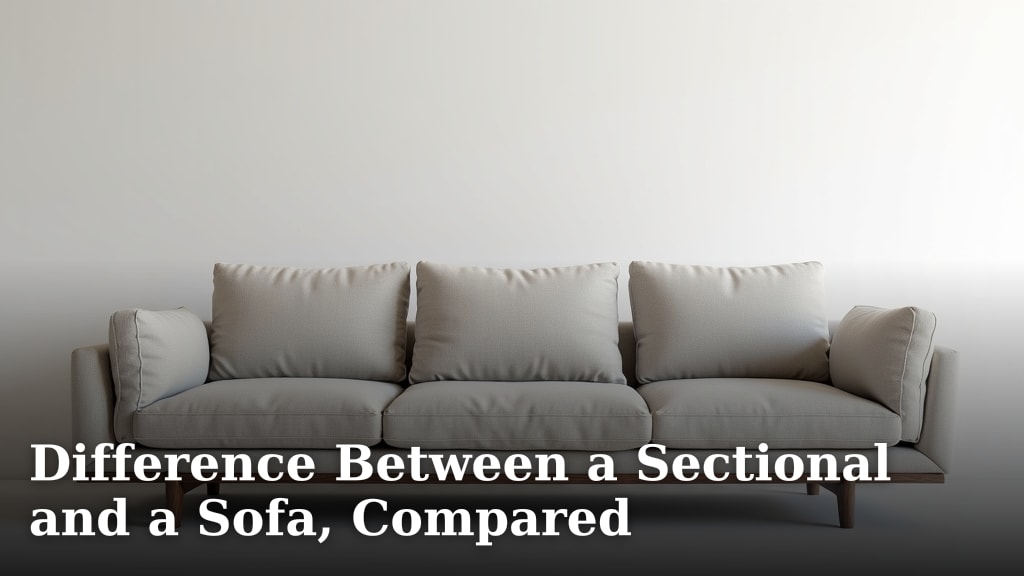
Difference Between a Sectional and a Sofa, Compared
A sectional offers more seating and flexibility than a standard sofa. The main difference is that sectional sofas are L-shaped or modular, while sofas are a single piece of furniture.
We found this choice often comes down to the size and shape of your room. You also need to consider your family size or entertaining habits. The right pick can completely change how you use your living space.
- Shape: Sectionals are L-shaped or modular; sofas are straight.
- Space: Sectionals need more room and define an area.
- Flexibility: Sectionals can be rearranged; sofas are one unit.
- Seating: Sectionals typically seat more people.
- Style: Both come in many fabrics and designs.
Below, we break down the key differences in seating, space, and style to help you decide which is best for your home.
How Sectionals and Sofas Differ in Key Ways
When you are shopping for living room furniture, the choice often boils down to two main options: a standard sofa or a sectional. We found that understanding their core differences can save you time and frustration. A sofa is a single, long piece of seating. A sectional is made of two or more pieces that connect. This simple difference affects everything from how you arrange your room to how many people you can invite over.
Space Requirements and Room Layout
The amount of space you have is a huge factor. Sectionals and sofas have very different footprints. You need to measure your room before you fall in love with a style.
Footprint and Clearances
A standard sofa is a straight line. It fits against a wall easily. Many experts say it needs about 36 inches of open space in front for legroom and walking (American Society of Interior Designers). A sectional is larger and often L-shaped. It needs more floor space. You should plan for at least 12 to 18 inches of clearance around the edges for a clean flow.
Small Room Considerations
Do you have a small apartment or a narrow living room? A sofa is usually the safer bet. It doesn’t dominate the space. A small, apartment-sized sofa can fit where a sectional cannot. If you try to squeeze a large sectional into a tiny room, it can feel like a blocker.
Open Floor Plans
For large, open areas, a sectional shines. It can act as a natural divider. It creates a “room within a room.” This defines your sitting area without needing walls. Many families find this helpful for separating a living room from a dining area.
Shape and Configuration
Sectionals come in different shapes. The most common is the L-shape. You can also find U-shaped or curved sectionals. A standard sofa is always straight. Think of a sectional like a puzzle. You can often choose which corner piece goes where.
Seating Capacity and Comfort
How many people do you need to seat? This is a primary reason people choose a sectional. We found that sectionals typically offer more seating than a single sofa.
Number of Seats
A standard sofa usually seats three people comfortably. A sectional can seat four, five, or even six people. This makes it great for families or people who host movie nights. You can often add a matching ottoman for even more seating.
Seating Experience
With a sectional, some seats are closer to the corner. This can feel cozy for families. However, if you sit in the corner, you are slightly turned. A sofa offers a straight-on view for everyone. It’s simpler and more uniform. Many people find sofas better for formal seating where everyone faces forward.
Flexibility and Rearranging
Life changes. You might move to a new home or just want a fresh look. Flexibility is where sectionals and sofas really part ways.
Modularity and Movement
Most sectionals are modular. You can often rearrange the pieces. Maybe you want to turn the L-shape into a longer sofa. Or you can separate the sections into a loveseat and a sofa. This flexibility is a big plus. A standard sofa is one solid piece. You can’t change its shape. You can only move it from room to room.
Long-Term Adaptability
Imagine you move to a home with a different living room layout. A sectional might fit better if you can rearrange it. A sofa might not work at all. Some sectionals have reversible chaises. You can move the long part from left to right. This helps if your room has a window or doorway on one side.
Style and Aesthetics
Both furniture types come in many styles. But they create different visual effects in a room.
Visual Impact
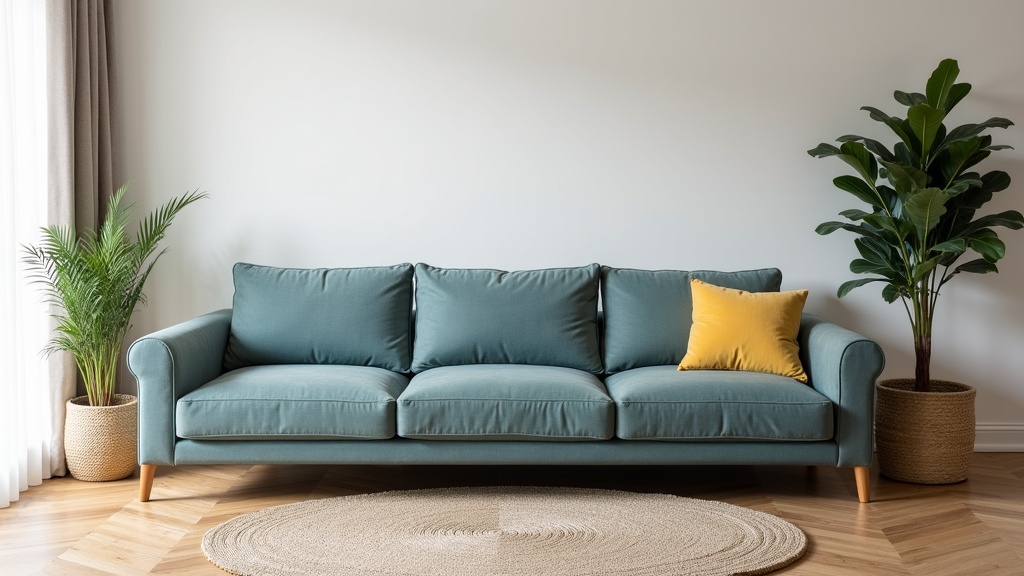
A sectional is a statement piece. It anchors a room. It draws the eye and becomes the focal point. A sofa can also be a focal point, but it’s often more subtle. A sofa pairs well with other chairs or tables. You can create a balanced look with multiple pieces.
Design Trends and Versatility
Many designers say that sectionals are popular for modern, casual homes. They create a relaxed, inviting vibe. Sofas are seen as more traditional or versatile. You can dress up a sofa with throw pillows for a formal look. Or keep it simple for a casual one. Both options are available in leather, fabric, and many colors.
Cost and Long-Term Value
Your budget matters. Price is a practical consideration for any shopper. Let’s look at how cost compares.
Initial Purchase Price
In general, a sectional costs more than a sofa of similar quality. This is because sectionals use more materials and have more parts. However, you are also getting more seating. A basic sectional might cost $800 to $1,500. A comparable sofa might be $600 to $1,200. These are just averages, and prices vary widely.
Durability and Replacement
Both can last a long time if well-made. The key is the frame and cushion quality. A solid wood frame lasts longer than particleboard. We found that high-density foam cushions hold their shape better. With a sectional, if one piece wears out, you might only need to replace that part. With a sofa, you might need to replace the whole thing. Some brands sell sectional pieces separately.
Comparing Sectionals and Sofas at a Glance
Here is a quick comparison table to help you visualize the differences.
| Feature | Sectional | Standard Sofa |
|---|---|---|
| Shape | L-shaped, U-shaped, modular | Straight, single piece |
| Space Needed | Large room, open floor plan | Small to medium rooms |
| Seating Capacity | 4-6 people | 2-3 people |
| Flexibility | Can be rearranged (if modular) | Fixed shape |
| Typical Cost | Higher (more material) | Lower to moderate |
| Best For | Large families, entertainers | Small spaces, formal living rooms |
Choosing What’s Right for You
So, which should you pick? It’s not about which is “better.” It’s about what fits your life. Let’s ask a few questions.
Your Household and Lifestyle
Do you have a big family or经常 host guests? A sectional makes sense. It gives everyone space. Do you live alone or with one other person? A sofa is often sufficient. It’s simpler and takes up less room. We found that families with kids often prefer sectionals. The extra seating is handy for playdates and movie nights.
Your Room and Layout
Measure your room. Use painter’s tape on the floor to mark where the furniture would go. This helps you see how it will fit. For a room with many doors or windows, a sofa might be easier to place. For a large, open area, a sectional can define the space nicely.
Quick Decision Checklist
Still unsure? Use this checklist to guide your decision. Answer each question to see what you lean toward.
- Room Size: Is your living room larger than 250 square feet? A sectional could fit well.
- Seating Needs: Do you regularly seat more than three people? A sectional is practical.
- Future Moves: Might you move or rearrange furniture often? A modular sectional offers flexibility.
- B
Conclusion
Choosing between a sectional and a sofa comes down to your space, seating needs, and lifestyle. We found that sectionals offer more seats and flexibility for large rooms and families. Sofas are simpler, often better for smaller spaces and more formal settings. Think about your room’s layout and how you actually use your living area. Do you host movie nights or need to divide an open floor plan? A sectional could be perfect. Is your space limited or do you prefer a classic look? A standard sofa is likely your best fit.
Your next step is simple: grab a tape measure and your room dimensions. Then, visit a furniture store. Sit on both options. See how each feels in person before you decide.
Frequently Asked Questions
Can I rearrange a sectional into a sofa later?
It depends on the design. If your sectional is truly modular with separate pieces, you may be able to store one section and use the rest as a sofa. However, most sectionals are designed as a set and won’t function as a standalone sofa without all pieces. Always check the configuration options with the retailer before buying.
Do sectionals always look more casual?
Not necessarily. While sectionals are common in modern, relaxed spaces, you can find tailored, leather, or formal fabric options. Choosing a structured design and elegant fabric can make a sectional work in a more traditional setting. The key is in the materials and overall room decor you pair it with.
How much extra space do I really need for a sectional?
Measure twice, shop once. As a general rule, leave at least 12-18 inches of clear walking space around all sides of the sectional. Ensure doorways and hallways can accommodate the largest piece during delivery. Using painter’s tape on your floor to mark the footprint is a smart way to visualize it.
Is a sectional a better value than a sofa?
It offers more seating per dollar, but costs more upfront. A sectional typically provides seats for 4-6 people, making it efficient for families or entertainers. The higher initial cost is for the extra materials and pieces. For the best value, focus on durable frames and high-quality cushions that will last for years.
What’s the most common mistake when buying a sectional?
Buying for style without measuring properly. Many people fall in love with a showroom sectional that is larger than their actual space. Always measure your room’s dimensions, including doorways and windows, first. A beautiful sectional that blocks traffic flow will quickly feel frustrating in your home.