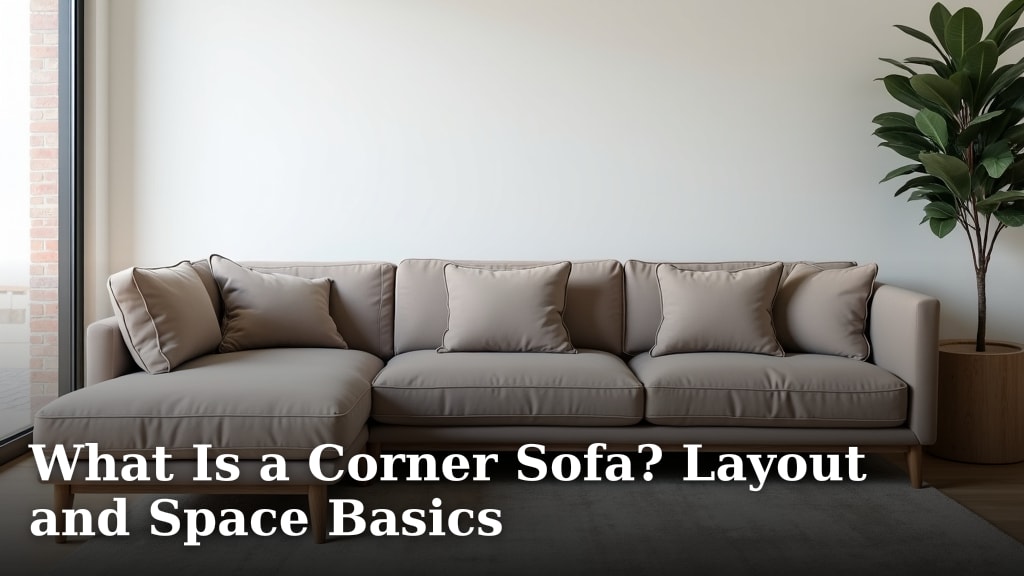
What Is a Corner Sofa? Layout and Space Basics
A corner sofa, often called a sectional, is a sofa that’s made of multiple pieces. These pieces can be arranged in an L-shape or a U-shape. They are perfect for maximizing seating in your living room. Think of it as a customizable seating solution for your space.
Understanding how a corner sofa fits your room is important. The layout depends on your room’s shape and size. A well-placed sectional can make a small room feel bigger. It can also create a cozy conversation area in a large open space. It’s all about smart arrangement.
- A corner sofa is a modular couch made of sections.
- It typically forms an L or U shape for flexible seating.
- Placement is key to optimizing your room’s space.
- Consider room dimensions and traffic flow for the best layout.
- Corner sofas can enhance both small and large living areas.
Now, let’s get into the nitty-gritty of corner sofa layouts and how to make the most of your space. We’ll cover how to measure and position them just right.
“`htmlUnderstanding Corner Sofa Arrangements for Your Home
A corner sofa, also known as a sectional, is a fantastic way to add lots of seating to your living space. It’s not just one big couch. Instead, it’s built from several pieces that connect together. This modular design means you can arrange it to fit your room perfectly. You can create cozy nooks or expansive seating areas. It’s like building blocks for your living room furniture.
What Makes a Corner Sofa a “Sectional”?
The main thing that makes a corner sofa a sectional is its component parts. Unlike a traditional sofa that’s one solid piece, a sectional is made of separate modules. These modules often include a sofa piece, a chaise lounge, and corner seats. Sometimes, you can even add armless chairs or ottomans to customize it further. This flexibility is why people love them. You can truly tailor it to your needs and your home.
The Two Main Corner Sofa Shapes
When you think of a corner sofa, two primary shapes usually come to mind: the L-shape and the U-shape. Each offers a different feel and suits various room layouts. Choosing the right shape is your first big decision.
The L-Shaped Layout
An L-shaped sectional is probably the most common type. It’s formed by two sofa sections that meet at a corner. This creates a distinctive “L” silhouette. This shape is excellent for defining a specific area within a larger room. It can also be placed against a wall or in a corner to maximize floor space. Think of it as a friendly embrace for your living room.
L-shaped sectionals are great for conversation. They naturally encourage people to face each other. This makes them ideal for families or for entertaining guests. They work well in both square and rectangular rooms. You can often choose which side the longer section is on. This adds another layer of customization.
The U-Shaped Layout
A U-shaped sectional is like an L-shape that has added an extra arm. It has three distinct sides that point outwards, forming a “U”. This shape is wonderful for creating a very cozy and enclosed seating area. It’s like building a little island of comfort in your living room. This layout is perfect for larger rooms where you want to create a distinct zone for relaxing or watching TV.
Because it wraps around, a U-shaped sectional offers a lot of seating. It can also help to visually break up a very large, open-plan space. However, it does take up more floor space. You need to make sure you have enough room for it to breathe. It’s not usually the best choice for very small rooms.
Measuring Your Space for the Perfect Fit
Before you even start looking at corner sofas, you absolutely must measure your room. This is the most important step. Taking accurate measurements prevents disappointment later on. You don’t want to buy a beautiful sectional only to find it doesn’t quite fit. Proper measurement ensures your sofa is both functional and comfortable.
What to Measure and How
You’ll need a few key measurements. First, measure the length and width of the entire room. Then, measure the specific wall space where you plan to put the sectional. If you’re thinking of an L-shape, measure the length of each wall it will occupy. For a U-shape, measure all three walls.
Don’t forget to measure your doorways and any hallways leading to the room. You need to be sure the sofa sections can actually get into your house and into the room. Sometimes, a sofa might fit once assembled, but its individual pieces won’t go through the door. Measure the height of your ceilings too, especially if you’re considering a very tall sofa back.
Mapping Out Your Layout
Once you have your measurements, it’s time to visualize. Use graph paper to draw a floor plan of your room. Mark the windows, doors, and any permanent features like fireplaces or radiators. Then, sketch out the dimensions of the corner sofa you’re considering. You can even use painter’s tape on your floor to mark out the size and shape of the sectional. This visual aid helps you see how it will actually fit and feel in your space.
Strategic Placement for Flow and Function
Where you place your corner sofa has a big impact. It affects how easy it is to move around your room. It also influences the overall feel of the space. Good placement makes your living room feel larger and more welcoming.
Considering Traffic Flow
Think about how people will walk through your living room. You need clear pathways. You don’t want guests or family members to have to squeeze past furniture. A common mistake is blocking a main walkway with a chaise lounge or a corner piece. Try to arrange the sectional so that there’s at least two to three feet of clear space for walking.
We found that placing the longest part of the sectional along a wall often works best. This keeps the main traffic lanes open. The shorter section can then extend into the room. This creates a natural division without blocking movement. If your room is an open-plan space, position the sectional to define the living area. It can act as a soft boundary.
The Importance of the “Conversation Zone”
Corner sofas are excellent for creating a conversation zone. This is an area where people can easily see and talk to each other. For an L-shaped sofa, arranging it so the two sections face each other, or one section faces a coffee table and chairs, works well. For a U-shaped sofa, the design naturally creates this zone.
When setting up your conversation area, think about your focal point. Is it a TV? A fireplace? A beautiful view? Arrange your sectional so that the seating is oriented towards this point. However, don’t let the TV completely dominate. Many interior designers suggest that at least one seating piece should not directly face the television. This encourages more face-to-face interaction. We found that positioning a coffee table within easy reach of all seats is also key for comfort and convenience.
Corner Sofas in Different Room Sizes
You might think corner sofas are only for huge houses, but that’s not true. They can be very effective in smaller spaces too, if chosen and placed carefully. It’s all about smart choices.
Small Spaces and Sectionals
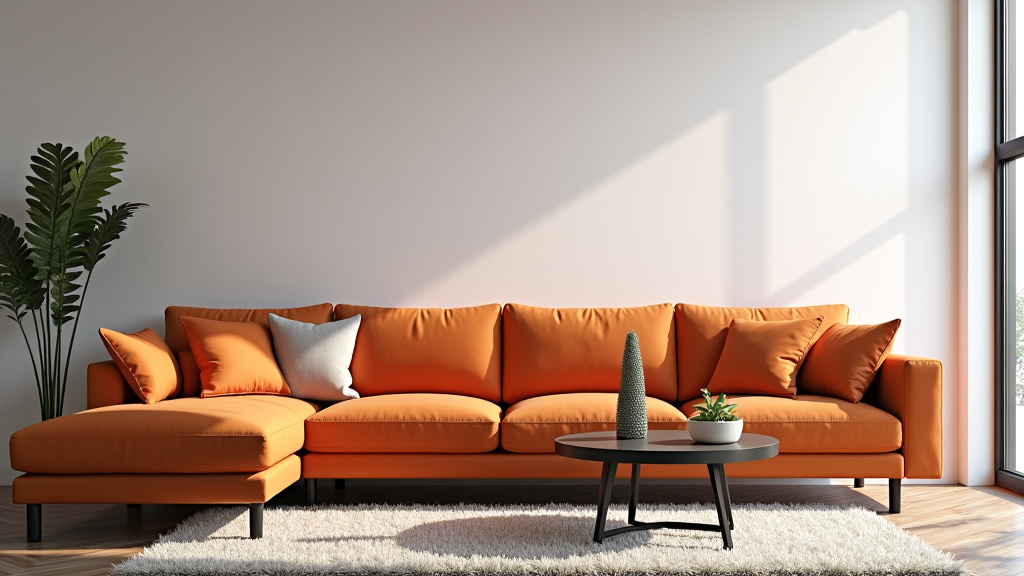
In a smaller living room, opt for a compact L-shaped sectional. Look for models with slimmer arms and exposed legs. Exposed legs create a sense of spaciousness by allowing you to see the floor underneath. Avoid bulky, oversized designs. A chaise lounge can be a good alternative to a full corner piece in very tight spaces. It offers a spot to stretch out without taking up as much room.
Placing a smaller sectional in a corner of the room can actually make the space feel larger. It leaves the center of the room more open. It’s a clever way to maximize seating without making the room feel cramped. Measure carefully, and don’t be afraid to go for a slightly smaller scale. Many brands offer “apartment-sized” sectionals.
Large Spaces and Sectionals
For larger living rooms, a generously sized U-shaped sectional can be a great anchor. It can help to fill the space and create a more intimate atmosphere. You can also use two separate sofa pieces to create a larger sectional effect. Think of a sofa facing another sofa, perhaps with a corner piece bridging the gap.
In large rooms, you have more freedom to play with placement. You can float the sectional in the middle of the room, using it to divide the living area from another zone, like a dining space. This helps to define different areas within a big open-plan home. Remember to balance the large sofa with other furniture pieces so the room doesn’t feel lopsided. We found that adding rugs and accent chairs can help to fill out the space and create a cozy feel.
Key Considerations Checklist
Here’s a quick checklist to help you plan your corner sofa placement:
- Measure your room dimensions precisely.
- Measure doorways and hallways for delivery access.
- Sketch your floor plan with furniture placement.
- Consider traffic flow and clear pathways.
- Determine your primary focal point (TV, fireplace, view).
- Choose a shape (L or U) that best suits your room size and layout.
Conclusion
You’ve now learned what makes a corner sofa a versatile sectional and the two main shapes it comes in. By carefully measuring your space and planning your layout, you can ensure your sectional fits perfectly. Strategic placement is key to creating good traffic flow and a cozy conversation zone. Whether your room is small or large, there’s a corner sofa solution. Your next step is to grab your measuring tape and start visualizing which corner sofa will best suit your home.
Frequently Asked Questions
Can a corner sofa work in a small apartment?
Yes, a corner sofa can absolutely work in a small apartment. Opt for a compact L-shaped design with slim arms and legs that show the floor. Placing it in a corner can actually make the room feel more open. Just be sure to measure carefully before buying.
How do I measure my doorways for a sectional?
You need to measure the height and width of your doorways and any hallways the sofa must pass through. Measure the dimensions of each sectional piece individually. This ensures the parts can be maneuvered into your home and into the room where it will be placed.
What’s the difference between an L-shaped and U-shaped sectional?
An L-shaped sectional has two sections that form a right angle, great for defining space. A U-shaped sectional has three sides, wrapping around more like a cozy enclosure. The U-shape offers more seating but requires more floor space than an L-shape.
How can I make my large living room feel cozier with a sectional?
In a large room, a generous U-shaped sectional can act as an anchor, creating an intimate feel. You can also use a sectional to divide the space, defining a living area within an open-plan layout. Adding rugs and accent chairs can further enhance the cozy atmosphere.
Is it better to place a sectional against the wall or in the middle of the room?
The best placement depends on your room and traffic flow. Placing the longest part of an L-shaped sectional against a wall often maintains clear pathways. In larger rooms or open-plan spaces, floating a sectional in the middle can effectively divide zones and create a central conversation area.