9 Best Foam for Couch Cushions (November 2026)
The best foam for couch cushions include the GoTo Foam 2" Height x 24" Width x 72" Length 43ILD (Firm) for cutting a full seat insert, the Welacer Bean Bag Filler for topping up soft cushions, and the Jecqbor Bean Bag Filler for soft, shapeable refill.
On this page (9 sections)
- Best foam for couch cushions, compared by type
- Foam for couch cushions compared for firmness, thickness and resilience
- How we compared these options
- How thick should foam for couch cushions be?
- Is foam cushion for couch use the same as upholstery foam?
- When should you use new foam for couch cushions?
- Sheet foam, shredded fill or a support pad: which one fits your sofa?
- How do you size and install replacement seat cushion foam?
- Verdict: which foam should you buy?
The best foam for couch cushions for most seat repairs is the GoTo Foam 2 inch sheet at 43 ILD, because you can cut it to fit, stack it to the right height and trust its 1.8 density to last through daily use. Pick the thicker GoTo or AK Trading sheet if your cover needs a single 4 inch core, and pick shredded fill if you only want to plump a soft cushion.
Foam for couch cushions comes in two main forms. Sheets give you a flat, structured insert with a clear thickness and firmness.
Shredded fill gives you a soft, moldable refill for pillows and loose covers. The right choice depends on whether your cushion has lost its shape or just lost its loft.
Our score weighs specs, features and buyer feedback against what you are shopping for. We compared density, ILD, thickness, size and recovery claims across these nine options.
We did not test them by hand, and we label maker claims as claims.
Our picks at a glance
-
1
 Best for cutting a full seat insert
GoTo Foam 2" Height x 24" Width x 72" Length 43ILD (Firm)
9.7/10 our score
See it on Amazon -
2

-
3

- 4
 Check it
FoammaUSA 2" x 20" x 20" High-Density
Best for small square cushions - 5
 Check it
GoTo Foam 4" Height x 24" Width x 96" Length 44ILD (Firm)
Best for thick single-sheet support - 6
 Check it
AK Trading CO. AK-Trading Upholstery High Density
Best for high-wear seat replacement - 7
 Check it
Spongiduits Couch Cushion Support for Sagging Seat
Best for sagging seats you keep - 8
 Best for a memory foam top layerCheck it
- 9
 Check it
FOAMYFOAM High Density 6 inch Thick
Best for deep, chunky cushions
Best foam for couch cushions, compared by type
Sheets win for seat inserts because they hold a flat shape and a boxed edge. Shredded foam wins for topping up because you can add small amounts and move the fill by hand.
Support pads win when you want to lift a sagging seat without opening the cushion at all.
If your sofa has a bench cushion, a long sheet lets you cut one full-width insert. If it has a T cushion, measure the front portion with care, since the shape wraps around the arm.
For back cushions that have gone flat, our guide to the best replacement sofa back cushions covers a different job, since back foam is usually thinner and softer.
GoTo Foam 2" Height x 24" Width x 72" Length 43ILD (Firm): Best for cutting a full seat insert
- 2 in thick, 24 in wide, 72 in long
- 43 ILD firm compression
- 1.8 density for longer life
- CertiPUR certified and made in the USA
A firm 2 inch sheet you can cut to size and stack for a custom seat cushion insert.
Pros
- Long 72 in length cuts into several inserts
- 43 ILD gives firm support
- 1.8 density aims for longer life
Cons
- Only 2 in thick, so you may need to stack sheets
- Needs cutting and a cover to finish
This GoTo sheet suits a buyer replacing one or more flat seat inserts and willing to cut foam to size. At 2 inches thick, 24 inches wide and 72 inches long, it gives you enough material for several cushions from one sheet.
The 43 ILD rating means firm support, while the 1.8 density aims for a longer service life than softer, lower-density foam.
GoTo says the foam is CertiPUR certified and made in the USA, with no fire retardant chemicals added. Sunlight can turn it from white to yellow, so keep cut pieces out of direct sun before they go inside a cover.
The trade-off is height. At 2 inches, this sheet often needs stacking or pairing with a wrap if your cover is deep.
That stacking is also the benefit, since you can tune the total thickness in small steps rather than guessing with one thick block.
Welacer Bean Bag Filler: Best for topping up soft cushions
- 10 lb shredded memory foam
- Rebounds in about 2 seconds under normal pressure
- OEKO-TEX certified materials
- 5 lb gives about 2 cu ft after expansion
Shredded foam that fills loose cushion covers and lets you add loft without cutting a sheet.
Pros
- Easy to add a little at a time
- Shredded pieces spread under pressure
- Suits pillows and small cushions
Cons
- Not a firm seat insert on its own
- Needs 24 to 48 hours to expand after opening
Welacer suits soft cushions, pillows and small seat pads that need more fill rather than a new core. The 10 lb bag of shredded memory foam expands after opening, and Welacer says 5 lb gives about 2 cu ft of fill.
That guide makes it easier to judge whether one bag can top up one cushion or several small pillows.
Welacer says the shredded pieces rebound in about 2 seconds under normal pressure. The pieces spread and settle when you sit, so the feel stays softer and more moldable than a flat sheet.
Welacer also says the material is OEKO-TEX certified and low odor after airing.
The trade-off is structure. Shredded fill will not hold a sharp boxed edge or a flat seat profile on its own.
Let the foam sit for 24 to 48 hours after opening, then fluff it by hand before you pour it into a cover.
Jecqbor Bean Bag Filler: Best for soft, shapeable refill
- 10 lb shredded memory foam
- Expands to about 4 cu ft
- Medium-firm feel
- Wait 48 hours for full expansion
A soft shredded refill for cushions you want to mold by hand rather than replace with a slab.
Pros
- Large expanded volume for the weight
- No static during filling
- Works for pillows and pet beds as well
Cons
- Less structured than a cut sheet
- Pieces can stick together after compressed shipping
Jecqbor suits buyers who want a soft refill they can shape by hand for couch cushions, pillows and pet beds. The 10 lb bag expands to about 4 cu ft, which is a lot of volume for topping up loose covers.
Jecqbor calls the feel medium-firm, and the shredded pieces adapt to body curves rather than holding one rigid shape.
Jecqbor says the memory foam is high density and does not create static while you fill a cover. That matters when you are working with a zippered cushion and want the pieces to move without clinging.
The trade-off is firmness control. You can add more or less fill, but you cannot match the flat support of a 44 ILD sheet.
Wait 48 hours after opening for full expansion, and separate any pieces that stuck together during compressed shipping.
FoammaUSA 2" x 20" x 20" High-Density: Best for small square cushions
- 2 x 20 x 20 in, 4 pack
- 1.8 density
- 44 lb compression
- CertiPUR-US certified and made in the USA
Four pre-cut 20 inch squares that drop into small seat cushions without a long sheet to trim.
Pros
- Pre-cut size saves cutting work
- 4 pack covers several seats
- Firm 44 lb compression
Cons
- 20 in width may be too small for wide seats
- Only 2 in thick per piece
FoammaUSA suits small square seat cushions where a long sheet would waste material. Each piece is 20 x 20 x 2 inches, and the pack holds 4 pieces.
That pre-cut size fits many chair and loveseat cushions without cutting, so you can drop a piece in, test the height and trim only if needed.
Foamma says the foam has a density of 1.8 and a compression rate of 44 lb, with a 100 percent recovery rate. In daily use, that means firm support that springs back after you stand.
Foamma also says the foam is CertiPUR-US certified and made in the USA.
The trade-off is width. A 20 inch square will not fill a wide bench or a deep sofa seat.
At 2 inches thick, you may need to stack pieces for taller cushions, so check your cover depth before you assume one layer is enough.
GoTo Foam 4" Height x 24" Width x 96" Length 44ILD (Firm): Best for thick single-sheet support
- 4 in thick, 24 in wide, 96 in long
- 44 ILD firm compression
- 1.79 density
- Made in the USA and CertiPUR certified
One thick 4 inch sheet for deeper seat cushions when a 2 inch layer feels too thin.
Pros
- Full 4 in thickness in one sheet
- Long 96 in length for multiple cuts
- Firm 44 ILD support
Cons
- Thick sheet can make a cover tight
- Heavier to move and trim than 2 in foam
This GoTo sheet suits deep seat cushions that need support from one thick piece. At 4 inches thick, 24 inches wide and 96 inches long, it cuts into several inserts and leaves room to adjust for different seats.
The 44 ILD rating gives a firm feel, and the 1.79 density aims for durability in home or commercial upholstery use.
GoTo says the foam is made in the USA and CertiPUR certified. A single 4 inch sheet also avoids the seams and layer shifts you can get when you stack thinner sheets.
That makes the finished cushion feel more unified under a tight cover.
The trade-off is fit. Four inches can be too tall for a shallow cover, and a 96 inch sheet is heavier and harder to move than a 2 inch sheet.
Measure inside the cover from seam to seam before you cut, since a few extra inches of height can stop the zipper from closing.
AK Trading CO. AK-Trading Upholstery High Density: Best for high-wear seat replacement
- 4 in thick, 24 in wide, 72 in long
- 1.8 density and 44 lb compression
- 100 percent recovery rate
- Easy to cut and made in the USA
A 4 inch high-density sheet aimed at furniture that gets daily use and needs to spring back.
Pros
- 4 in thickness for deep seats
- High density for wear and tear
- Easy to cut and shape
Cons
- Firm feel may be too hard for some
- No cover included
AK Trading suits high-wear seats, from family sofas to commercial furniture. The sheet is 4 inches thick, 24 inches wide and 72 inches long, with a density of 1.8 and a compression rate of 44 lb.
AK Trading says the foam has a 100 percent recovery rate, so it should bounce back after long periods of sitting.
AK Trading says its upholstery foam can last 7 to 10 years in frequent use. That claim matters most for seats that get daily traffic, where low-density foam tends to soften and dip sooner.
The trade-off is feel. A firm 44 lb compression foam can feel hard if you prefer a softer, plusher seat.
It also ships without a cover, so plan for a muslin wrap or your existing cushion cover. Open it right away, since AK Trading says full expansion takes 24 to 48 hours.
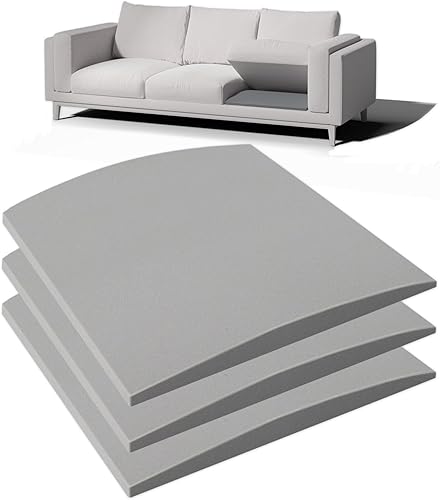
Spongiduits Couch Cushion Support for Sagging Seat: Best for sagging seats you keep
- 20 x 20 x 2 in, set of 3
- 40D high density foam
- Curved design can be cut to fit
- Slides under a drooping cushion
A support pad that goes under a sagging cushion to lift the middle without replacing the insert.
Pros
- No tools to install
- Lifts a drooping seat in seconds
- Can be trimmed for fit
Cons
- Does not repair a worn insert
- Raises the seat height by 2 in
Spongiduits suits a sofa where the cushion still has its cover and shape but the seat dips in the middle. Each pad is 20 x 20 x 2 inches, and the set holds 3 pieces.
You slide a pad under the cushion, and the 40D high density foam lifts the drooping area without tools or sewing.
The curved design can be cut or shaped to fit most sofas and armchairs. Spongiduits says the foam has natural friction, which helps the pad stay in place under the cushion instead of sliding on a smooth frame.
The trade-off is scope. This pad supports a sagging seat but does not rebuild a worn or broken insert inside the cover.
It also adds 2 inches of height, so check that the cushion still sits well with the pad in place. The foam is vacuum sealed, so allow about 24 hours for it to regain shape.
Aqzuxira Upholstery Foam: Best for a memory foam top layer
- 72 x 24 x 2 in
- 0.8 in memory foam over 1.2 in support foam
- Slow rebound and gradual pressure release
- Cut to size and allow 48 hours to expand
A two-layer pad with a memory foam top for softer pressure relief over a firm base.
Pros
- Memory foam top conforms to the body
- Support layer helps hold shape
- Easy to trim to length
Cons
- Softer top may feel less firm
- Needs 48 hours to reach full thickness
Aqzuxira suits buyers who want a softer top over a firm base. The pad is 72 x 24 x 2 inches, built from a 0.8 inch memory foam layer bonded to a 1.2 inch foam support layer.
The memory foam top gives slow rebound and gradual pressure release, while the support layer helps the pad keep its shape.
Aqzuxira says the memory foam conforms to body contours and spreads pressure more evenly than plain foam. In daily use, that can feel more cushioned on top while the base stops the seat from bottoming out.
The trade-off is firmness. If you want a firm, structured seat insert, this softer top layer may feel too plush.
It also needs about 48 hours to expand after vacuum packaging, so plan the timing before you cut it to fit your cover.
FOAMYFOAM High Density 6 inch Thick: Best for deep, chunky cushions
- 6 in thick, 24 in wide, 24 in long
- 1.8 density and 44 ILD
- Made in the USA
- Allow 2 to 3 days to decompress after shipping
A thick 6 inch block for deep seat cushions that need a tall, firm core.
Pros
- 6 in thickness fills deep covers
- 44 ILD firm support
- Pre-cut square saves trimming
Cons
- 24 in square may not fit wide seats
- Very thick foam can crowd a cover
FOAMYFOAM suits deep, chunky cushions that need a tall core. The block is 6 inches thick, 24 inches wide and 24 inches long, with a density of 1.8 and a 44 ILD compression rating.
That mix gives firm support with a density aimed at longer life in seat cushion replacement.
The pre-cut square saves trimming work if your cushion is close to 24 inches on each side. FOAMYFOAM says it cuts foam from 1 to 7 inches thick and a wide range of widths and lengths, so custom sizes may be possible if this square does not fit.
The trade-off is height and fit. Six inches is a lot of foam for a shallow cover, and a 24 inch square will not fill a wide bench seat.
Allow 2 to 3 days for the foam to decompress after shipping before you measure and cut it.
Foam for couch cushions compared for firmness, thickness and resilience
Firmness comes from ILD, thickness comes from the sheet height, and resilience comes from density and recovery claims. A 44 ILD sheet feels firm.
A 43 ILD sheet feels almost the same. Density tells you more about lifespan than feel.
Thickness is the spec that causes most fit problems. Match the old insert first.
If you cannot measure the old insert, measure inside the cover and leave room for the wrap and zipper. A sheet that is 1 inch too tall can be harder to install than one that is 1 inch too short.
Resilience matters in the middle of the seat, where you sit most. High density foam with a high recovery rate should spring back after you stand.
Shredded foam springs back in a different way, since the pieces move and resettle under your weight.
| Product | Best for | Size | Density | Firmness | Our score |
|---|---|---|---|---|---|
| GoTo Foam 2" Height x 24" Width x 72" Length 43ILD (Firm) | cutting a full seat insert | 24 x 72 x 2 in | 1.8 | 43 ILD | 9.7 |
| Welacer Bean Bag Filler | topping up soft cushions | 9.6 | |||
| Jecqbor Bean Bag Filler | soft, shapeable refill | Medium-firm | 9.5 | ||
| FoammaUSA 2" x 20" x 20" High-Density | small square cushions | 1.8 | 9.2 | ||
| GoTo Foam 4" Height x 24" Width x 96" Length 44ILD (Firm) | thick single-sheet support | 96 x 24 x 4 in | 1.79 | 44 ILD | 9.0 |
| AK Trading CO. AK-Trading Upholstery High Density | high-wear seat replacement | 72 x 24 x 4 in | 1.8 | 8.8 | |
| Spongiduits Couch Cushion Support for Sagging Seat | sagging seats you keep | 40D | 8.5 | ||
| Aqzuxira Upholstery Foam | a memory foam top layer | 72 x 24 x 2 in | 8.3 | ||
| FOAMYFOAM High Density 6 inch Thick | deep, chunky cushions | 24 x 24 x 6 in | 1.8 | 44 ILD | 8.1 |
How we compared these options
We checked the specs for each option against the same questions. We looked at thickness, width and length, then density and ILD where the brand publishes them.
We also noted whether the form was a sheet, shredded fill or an under-cushion support pad.
We grouped the picks by job. Sheets compete for seat inserts.
Shredded fill competes for soft refill. Support pads compete for sag repair without opening a cushion.
That grouping keeps the comparison honest, since each form solves a different problem.
We gave higher scores to options that publish clear firmness and density numbers, fit common seat sizes and suit daily use. We gave lower scores to options that are narrower, softer for seat inserts or more limited in use.
Our score weighs specs, features and buyer feedback against what you are shopping for, and we did not test these products by hand.
How thick should foam for couch cushions be?
Match the thickness of the old insert when you can. Pull the old foam out, lay it flat and measure it away from the cover.
That number is your starting point for new foam cushions for couch use.
If the old insert is gone, measure inside the cover from seam to seam. Add room for a wrap, since a muslin or fabric wrap takes up space.
A cover that measures 4 inches deep inside may need foam that is a little thinner when wrapped.
2 inch foam
Two inch foam suits thin repairs, seat pads and stacked builds. It is easy to cut and easy to test.
Stack two layers when you need about 4 inches, and you can remove one layer if the cover will not close.
4 inch foam
Four inch foam suits most full seat inserts. It gives firm support in one piece and avoids layer seams.
Check the cover depth first, since 4 inches plus a wrap can be tighter than it sounds.
6 inch foam
Six inch foam suits deep, modern cushions with tall covers. It fills the cover with one block and gives a chunky look.
It is a poor fit for shallow covers, where it can crowd the zipper and change how the cushion sits.
Is foam cushion for couch use the same as upholstery foam?
Yes, in most cases the same sheet foam works for both. Upholstery foam is a general term for foam used inside furniture.
Foam cushions for couch seats are one use of that material.
The key specs matter more than the name. Look for density for lifespan and ILD for firmness.
A sheet sold for boats, cars or poker tables can still work in a sofa if the thickness and size fit your cover.
Density
Density is often written as 1.8 or as a number like 40D. Higher density usually means more material in the foam and a longer life.
It does not mean the foam feels firmer.
ILD and compression
ILD is the firmness rating. A 44 ILD foam needs more force to compress than a 25 ILD foam.
Brands sometimes call both density and ILD by similar names, so check which number you are reading.
When should you use new foam for couch cushions?
Replace the insert when the cushion stays flat after you plump it. If you sit and feel the frame or the support below, the foam has lost its resilience.
More fill will not fix a core that no longer springs back.
Replace the insert when the cover no longer fits the shape. Foam that crumbles, breaks into pieces or holds a deep dip in one spot has reached the end of its useful life.
A new sheet cut to the old size will sit flatter in the cover.
Signs the foam is worn out
Look for a cushion that sinks in the middle, foam that breaks or crumbles, and a cover that looks loose because the core has shrunk. Those signs point to a replacement insert rather than a top-up.
Signs you only need more fill
Look for a cushion that still has its shape but feels soft and thin. That can be a back cushion, a throw pillow or a seat cushion with a loose cover.
Shredded fill can add loft in small amounts.
Sheet foam, shredded fill or a support pad: which one fits your sofa?
A sheet fits a seat insert with a flat shape and a defined edge. It works best when you can measure the old insert or the inside of the cover.
Cut the sheet, wrap it and slide it into the cover.
Shredded fill fits soft cushions and pillows. It works best when the cover is loose and you want to add loft by hand.
Pour in a little, test the feel, then add more if needed.
A support pad fits a sagging seat you want to keep. It slides under the cushion and lifts the middle.
It is the fastest option when the insert is still intact but the seat dips.
For a bench cushion sofa
A long sheet lets you cut one insert that spans the seat. Measure the full width and depth inside the cover.
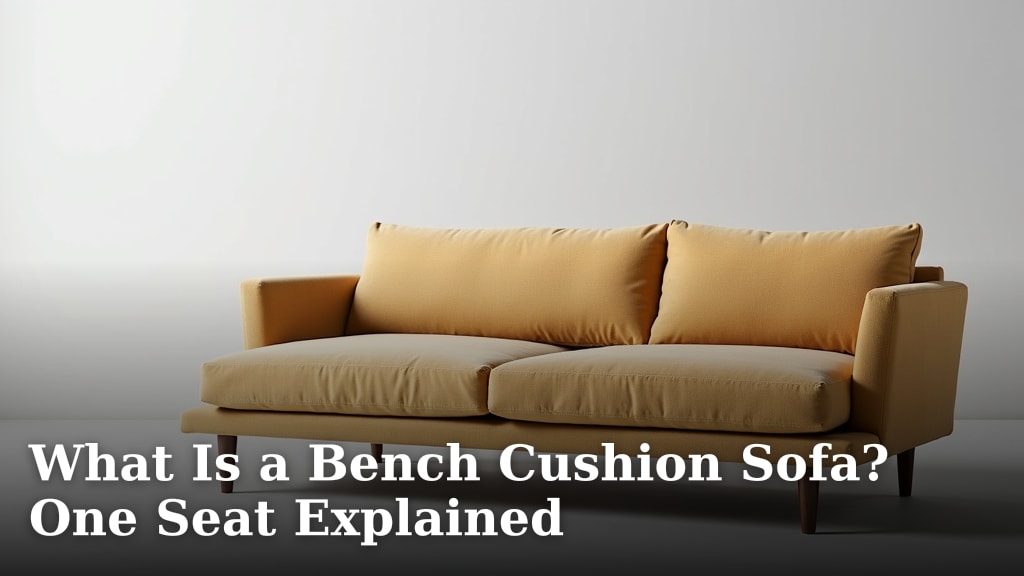
Our guide to a bench cushion sofa helps you check whether your seat is one long cushion or separate pieces.
For a T cushion sofa
A T cushion wraps around the arm at the front, so the foam shape is more complex. Measure each part of the cover with care.
Our explainer on a T cushion sofa covers the shape, which helps you plan cuts.
For an older or unusual shape
A fainting couch has a curved, reclined shape that standard sheets may not fill well. Shredded fill can work better there, since it can move into curves.
Measure the cover in sections before you choose a form.
How do you size and install replacement seat cushion foam?
Measure length, width and height inside the cover from seam to seam. Write the numbers down before you order.
A sheet that is close to the cover size is easier to fit than one that needs heavy trimming.
Cut with a sharp knife on a flat surface, and cut a little at a time. It is easier to trim more foam than to add foam back.
Test the cut piece in the cover before you wrap it.
Wrap the foam in a thin fabric layer if your cover has room for it. The wrap helps the foam slide into the cover and gives the cushion a smoother edge.
Then zip the cover closed and sit on it to check the height and feel.
How long should foam expand before use?
Vacuum-compressed foam needs time to recover. Many sheets need 24 to 48 hours in a well ventilated room.
Thick blocks can need 2 to 3 days.
Do not cut foam until it has reached full thickness. A piece that looks short on day one may grow by the time it is ready to install.
How do you keep new foam in good shape?
Keep foam out of direct sunlight, since sunlight can yellow it and break it down over time. Keep it dry, and let it air out if it picks up odor from packaging.
Rotate cushions from time to time when your sofa allows it. That spreads wear across more than one seat and can help the foam keep its shape longer.
Verdict: which foam should you buy?
Buy the GoTo Foam 2 inch sheet if you want the most flexible cut-to-fit option. Its 43 ILD firmness and 1.8 density suit seat inserts, and you can stack it to reach the right height.
Buy a 4 inch sheet if your cover needs one thick core. The GoTo 4 inch sheet and the AK Trading sheet both pair 4 inches of thickness with firm 44 lb compression.
Pick the length that best matches your seats.
Buy shredded fill if you want to plump a soft cushion. Welacer and Jecqbor both give you 10 lb of shredded memory foam you can add in small amounts.
That is a refill, not a structured seat insert.
Buy a support pad if you want to lift a sag without opening the cushion. The Spongiduits pad slides under a drooping seat and adds 2 inches of support in seconds.
Measure your cover first, then pick the form that matches the job. That order matters more than any single spec, since even the best foam will not help if it does not fit.
Our top 3 picks at a glance
-
1
Best for cutting a full seat insert
GoTo Foam 2" Height x 24" Width x 72" Length 43ILD (Firm)
9.7/10 our score
See it on Amazon -
2
-
3
Frequently asked questions
What is the best foam for couch cushions that sag?
For a sagging seat you want to keep, a 2 inch support pad under the cushion lifts the middle fast. For a worn insert, a firm 4 inch sheet at about 44 ILD gives a structured replacement.
Measure the cover first, since extra height can make the cover tight.
Is high density foam the same as firm foam?
No. Density affects how long foam lasts, and ILD affects how firm it feels.
A foam can be high density and still feel soft if the ILD is low.
Check both numbers before you buy, since firmness and lifespan come from different specs.
How thick should replacement seat cushion foam be?
Match the thickness of the old insert, or measure inside the cover from seam to seam. Many seat cushions work with 4 inches of foam, while thinner local repairs use 2 inches.
Too much thickness can stop the cover from closing.
Can shredded foam replace a seat cushion insert?
Shredded foam works well to top up a soft pillow or a loose cushion cover. It does not hold a boxed edge or a flat seat shape the way a cut sheet does.
Use a sheet for a structured seat insert and shredded fill for soft refill.
How long should foam sit after it arrives?
Let compressed foam expand in a well ventilated room before you cut or install it. Many sheets need 24 to 48 hours, and some thick blocks need 2 to 3 days.
Cutting too soon can leave you with a piece that is still short of its full size.