Futon vs Sofa Bed: Which Should You Choose? (October 2026)
Choose a futon for a simple, flexible layout and a sofa bed for a more sofa-like seat. Compare the sleeping surface, room space and how often you'll convert it before choosing.
On this page (8 sections)
- Futon vs sofa bed: what is the main difference?
- Which one is more comfortable to sleep on?
- Which design works better for everyday seating?
- How much room does each need?
- Which is easier to convert and maintain?
- Which should you choose for a small room?
- How we compare futons and sofa beds
- Futon or sofa bed: which should you choose?
Choose a futon for a simple, flexible layout and a sofa bed for a more sofa-like seat. In a futon vs sofa bed comparison, sleeping comfort depends on the exact surface, while room fit depends on its footprint in both modes.
A futon often converts by folding or repositioning its seat and back. A sofa bed may pull out a separate mattress or expand its cushions into a sleeping surface.
For a closer look at the designs, read What Is a Futon? Mattress, Frame and History and [What Is a Sofa Bed?
How It Turns Into a Bed](/what-is-a-sofa-bed/).

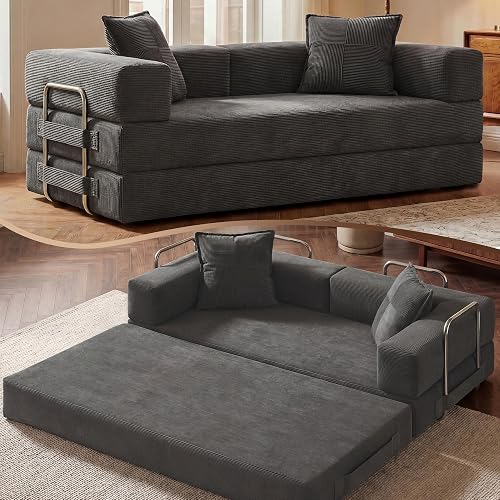 Best for a broad sleep surface
GRUSIGN 78" 5-in-1 Convertible Futon Sofa Bed
Futon vs sofa bed: what is the main difference?
A futon usually changes its seating surface into a bed, while a sofa bed may unfold a separate mattress or expand its cushions. The names cover different designs, so check how each model converts.
A futon can be a mattress on a folding frame or a cushion-based convertible. A sofa bed can use a folded mattress, pull-out mechanism or a boneless cushion layout.
The distinction affects setup and feel. A separate mattress may feel different from sleeping on seat cushions, while a folding cushion design avoids pulling a bed frame out into the room.
How does a futon open?
A futon commonly folds flat or shifts its backrest down to create a sleeping surface. Some models use a dedicated mattress and frame; others use foam cushions.
Read sleeper sofa vs futon for a comparison that focuses on the sleeper-sofa format. The exact mechanism matters because it determines the steps and space needed at bedtime.
How does a sofa bed open?
A sofa bed can reveal a mattress stored inside the frame, or its cushions can rearrange into a bed. Check where the sleeping surface comes from and whether the conversion requires moving nearby furniture.
The broader category includes sleeper sofas, too. This guide to [What Is a Sleeper Sofa?
How the Bed Folds Out](/what-is-a-sleeper-sofa/) explains how that design differs.
Which one is more comfortable to sleep on?
Neither style guarantees better sleep; compare the sleeping surface, its support and its size. Foam, a separate mattress and a folded futon mattress can feel quite different.
A continuous foam surface avoids the gaps that can form between separate seat cushions. A pull-out mattress gives you a distinct bed surface, but its thickness and feel vary by model.
If guests stay overnight often, ask how long they'll sleep on it and whether they need room to turn. For occasional naps, a simple fold-out surface may be enough.
The GRUSIGN futon has a 78 x 78 in sleeping surface with high-density foam. Its broad square area may suit two sleepers, but measure the room with the full surface open.
The MAXYOYO folding sofa bed measures about 33.5 x 74.8 in and is described for one person. It includes a headrest and lumbar pillow, which may help you settle in for a nap or solo rest.
For air-filled guest options, see futon vs air mattress. An air mattress stores differently and has different setup needs, so compare the trade-offs before deciding.
Which design works better for everyday seating?
Choose by the seat you want to use most days, not only by how it looks as a bed. A sofa-bed frame may preserve a familiar sofa shape, while a futon gives you a surface designed to change position.
Think about seat height, back support, arms and cushion firmness. A low folding sofa may be comfortable for lounging on the floor, but less convenient if you prefer a raised seat.
The Erament Convertible Sofa Bed folds from a loveseat into a sleeper and uses high-density memory foam. It arrives assembled, and its filling may need up to 72 hours to rebound after unpacking.
The FASADI convertible offers several configurations, including a three-seat sofa, oversized sleeper, lounge recliner and game chair. Its armrests include cup holders and storage pockets, so consider it if those features help your usual seating routine.
If you are comparing a futon with another everyday seat, see futon vs recliner for differences in lounging and room use.
How much room does each need?
Measure each piece in both its seating and sleeping positions. A compact sofa can still need a wide clear area once it opens.
Record the width and depth of the closed piece, then mark the open dimensions on the floor with painter's tape. Leave space for doors, drawers, walkways and anyone using the bed.
The FASADI measures 76 x 36 in as a sofa and 76 x 81.3 in as a sleeper. That open depth can make it a poor fit if the sofa faces a narrow walkway.
The Erament is listed at 53 in wide and 33.8 in deep as a loveseat. Use those measurements as a starting point, then confirm the open bed footprint for your intended room.
A best sleeper sofa with chaise can add a longer lounging section, but the chaise also claims floor space. Compare it with a futon if a clear central path matters more than a permanent lounge area.
Which is easier to convert and maintain?
The simpler choice is the one you can convert and care for without disrupting the room. Try to understand each step before buying, especially if you'll make the bed every night.
A folding futon may only need its backrest moved, while a pull-out sofa bed may require clearing space and unfolding a frame. Cushion-based designs can be easier to rearrange, but the result depends on how the pieces line up.
Check what needs cleaning, too. GRUSIGN has removable corduroy covers on its seat and back cushions; Erament says its cover is machine washable, while MAXYOYO's seat cover is not removable.
FASADI's maker advises allowing 72 hours for expansion after unpacking. MAXYOYO calls for 48 hours, and both GRUSIGN and Erament advise letting the filling rebound before judging the comfort.
Which should you choose for a small room?
Pick the design with the smaller closed footprint and a manageable open footprint for your room. A convertible piece saves space only if you can still use it in bed mode.
For a studio or office, consider whether you need a full sofa profile or a one-person lounging spot. The MAXYOYO's single-person size may suit a corner, while a larger modular futon can use more floor area when opened.
A compact loveseat that folds out may balance daily seating and occasional sleep. The Erament arrives assembled, which avoids a separate furniture assembly step, though you still need space for its bed configuration.
If you want a daytime bed shape that stays open, compare a futon vs daybed before choosing a convertible design. A daybed can keep a sleeping surface ready, but it occupies that footprint all day.
How we compare futons and sofa beds
We compare the conversion style, sleeping area, seating features and setup details against the needs of this search. These details help narrow the options, but personal comfort depends on your body and preferences.
Our score weighs specs, features and buyer feedback against what you're shopping for. Product features and dimensions above describe the models; they aren't a substitute for checking fit in your room.
A futon can be the better match when its folding layout, broad cushion or simple conversion fits your routine. A sofa bed can be the better match when you want a sofa-like seat or a separate sleeping surface.
Futon or sofa bed: which should you choose?
Choose a futon if you want a flexible folding surface and the open dimensions work in your room; choose a sofa bed if you prefer a sofa-like seat or a dedicated mattress design. Measure both modes and consider who will sleep there.
For a compact loveseat with a memory-foam sleeper, consider the Erament. For a broad convertible surface, compare the GRUSIGN's 78 x 78 in layout with your available floor space.
If sleeping comfort is your main concern, focus on the exact surface and how often you'll use it overnight. The choice between futon and sofa bed comes down to your preferred seat, the way it opens and the room you can give it.
Frequently asked questions
Is a futon or sofa bed better for everyday seating?
A sofa bed may suit everyday seating if you prefer a more sofa-like form, while a futon can work when you want a simpler convertible layout. Compare the seat shape, cushion feel and how each piece fits your room.
Names alone don't tell you how comfortable a specific model will be.
Can a futon replace a bed for guests?
A futon can serve as a guest bed if its open sleeping surface fits the guest and the room. Check the exact dimensions, cushion support and how often it will be used overnight.
For frequent guests, prioritize a comfortable, easy-to-prepare surface over a design that only saves space.
Does a sofa bed take more space than a futon?
It depends on the model and its open dimensions. A futon may fold flat, while a sofa bed may need floor space for a pull-out mattress or an expanded cushion layout.
Measure the closed and open footprint, plus walking paths, before choosing either style.
Are futons and sofa beds the same thing?
Both convert from seating to a sleeping surface, but their construction and names vary. A futon often folds or repositions its seat and back, while a sofa bed may unfold a separate mattress or expand its cushions.
Check how the exact design changes shape before you buy.


