Sleeper Sofa vs Daybed: Which Should You Choose? (November 2026)
Choose a sleeper sofa for sofa-style seating that converts for guests, or a daybed for a bed that stays ready and works as a lounge. Your room layout and how often you host help settle the sleeper sofa vs daybed choice.
On this page (6 sections)
Choose a sleeper sofa for sofa-style seating that converts for guests, or a daybed for a bed that stays ready and works as a lounge. Your room layout and how often you host help settle the sleeper sofa vs daybed choice.
A sleeper sofa usually keeps a familiar living-room look when closed, while a daybed has a mattress that remains in place. The first favors a hidden guest bed; the second favors quick access to a sleep surface.
For a broader look at what a sleeper sofa is and how it folds out, start with the mechanism. Then compare the open-bed footprint with the space a daybed frame and bedding will occupy.

 Best for improving a pull-out setup
Meliusly Sleeper Sofa Bed Support Board Queen
Sleeper sofa vs daybed: which is better for shared rooms?
A sleeper sofa is often easier to treat as everyday living-room furniture, while a daybed makes its sleep function visible all the time. Pick the look and routine that work for the room when no guest is staying.
A closed sleeper sofa gives you a seat and can leave the floor clear for other uses. When guests arrive, you open the bed, set out bedding and make sure there is room to walk around it.
A daybed keeps a mattress on the frame, so no fold-out step is needed. It can function as a reading spot or lounge, but it may look more like a bed unless you style it with cushions and a cover.
Think about the room's other jobs. In an office or studio, a sleeper sofa can keep the space looking like a sitting area during the day, while a daybed can double as a place to stretch out between tasks.
When does a sleeper sofa make more sense?
A sleeper sofa makes more sense when you want seating that converts for occasional overnight guests. It can work well in a living room, den or office that can't keep a bed set up every day.
The trade-off is the conversion routine. You may need to remove cushions, pull out a frame or unfold layers, then restore the sofa when guests leave.
A folding option such as the {{product B0FX4K8N45 | Erament's loveseat folds out for guest sleeping and returns to seating when the room needs its floor space back.}} can suit a small shared room. Check the open footprint and sleeping surface before deciding where it will go.
When does a daybed make more sense?
A daybed makes more sense when you want a sleep surface that is always available and can also serve as a lounge. It can be a practical choice for a guest room that doubles as a reading or hobby room.
You don't need to pull out a bed frame before someone sleeps. You do need a place for pillows and bedding when the daybed is being used as a seat.
A twin mattress such as the {{product B0G366PV36 | PrettSun's 5-inch twin mattress is designed for daybeds and gives a compatible frame a dedicated sleep surface.}} can help complete that setup. Measure the inside of the frame and confirm its mattress height limits first.
Which is easier to prepare for overnight guests?
A daybed is ready to sleep on without conversion, while a sleeper sofa needs setup but can hide the bed afterward. Your hosting frequency determines which routine feels simpler.
With a daybed, you may need only to add sheets and a blanket. If the room is used for daily sitting, remove or reposition decorative pillows and bedding before guests arrive.
A sleeper sofa saves the task of converting the room back into a bed every morning. However, you need to pull out the mattress, make the bed and leave the mechanism open for the stay.
If you are deciding between a sleeper sofa and a sofa bed, compare how the terms are used for the specific models you are considering. Names vary, so the mechanism and mattress matter more than the label.
For frequent hosting, consider how comfortable and simple the sleep setup will be for guests. A support board like the {{product B0DQVLJ2T1 | Meliusly's board stays beneath a pull-out mattress and folds away with a compatible sofa bed frame.}} is designed to cover support bars that can be felt through a thin mattress.
How much floor space do they need?
A sleeper sofa needs clear floor space when opened; a daybed needs room for its full frame and stays that size all the time. Measure the room in both furniture states before you choose.
Start with the wall length for the closed sofa or daybed, then measure from the front edge to the nearest obstacle. Include door swings, walkways and space for a guest to get in and out of bed.
For a sleeper sofa, don't stop at its closed dimensions. Some models open forward, while others unfold into a low floor bed, so check the exact open footprint.
For a daybed, include the frame depth, mattress thickness and any side rails. Leave enough room to sit down and stand up without blocking a doorway or closet.
Will either option work in a small room?
Either can work in a small room if you preserve the main walkway and can use the bed mode comfortably. The sleeper sofa may offer more open floor space during the day, while the daybed avoids a conversion step.
Use painter's tape to mark the furniture footprint, then mark the open bed area separately. Walk through the taped layout and check that drawers, closets and doors still work.
Don't choose by closed size alone. A compact sofa that blocks the only path when opened may be less useful than a daybed that occupies a steady, predictable area.
How do you check sleeper sofa bed size?
Check the sleeping surface dimensions and the room clearance together. A queen mattress needs more width than a twin, and the frame may need additional space around it.
Our guide to what size a queen sleeper sofa helps you compare bed dimensions with a room plan. Measure the path to the bed too, since a mattress can fit on paper while leaving too little room to move.
If the sofa opens into a floor futon, make sure the sleeping area does not overlap a heater, doorway or hard-to-move furniture. Follow the model's own instructions for setup and use.
Which is more comfortable for sitting and sleeping?
Neither style guarantees comfort by itself; compare the seat or mattress, support and dimensions for the model and the person using it. A sofa seat and a bed mattress serve different daily purposes.
A daybed uses its mattress for both lounging and sleep. Some people like a firmer, flat surface for reading, while others prefer a sofa back and seat cushions that keep them upright.
A sleeper sofa prioritizes seating when closed, but its bed surface and frame vary by design. Pull-out models, folding floor sofas and futon-style designs can feel quite different.
Look closely at the materials and support method. Foam thickness, frame bars, mattress dimensions and cushion shape all affect how the furniture may feel, but individual comfort varies.
Can guests sleep on a daybed every night?
A daybed can be used nightly if its mattress and frame are suitable for that routine. Check the mattress dimensions, support requirements and care instructions for the exact set you choose.
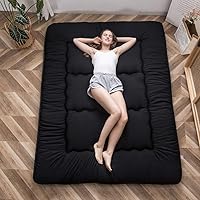
A low-profile twin option like the {{product B0G1YF5HZW | Living&Giving's 70-inch flip-out loveseat unfolds into a floor futon, offering a low lounge-to-bed alternative when a framed daybed is not the desired style.}} differs from a conventional framed daybed, so compare the sleeping arrangement you want before buying.
Don't assume that every daybed mattress comes with the frame or that a decorative back cushion replaces a proper sleeping pillow. Confirm what is included and whether the setup fits your regular sleep needs.
Can you make a sleeper sofa more comfortable?
You can assess mattress support and thickness before buying, and some accessories are made to reduce pressure from support bars. A support board may help on compatible pull-out frames, but it doesn't change the sofa's mattress dimensions.
For an existing sofa bed, compare the frame type, mattress size and available clearance before adding anything. Our guide to the best queen sleeper sofa replacement mattress can help if the current mattress needs replacing.
If you prefer leather upholstery, see our guide to the best sleeper sofa leather for options in that material. Confirm care needs and the bed mechanism as well as appearance.
Which option is easier to keep tidy?
A sleeper sofa hides its bed when closed, while a daybed needs regular pillow and bedding management. Choose the routine that will keep the shared room ready for its everyday use.
A daybed can look like a sofa when pillows line the back and a cover hides the sheets. That setup takes a little daily attention, especially if the bed is used overnight.
A sleeper sofa can keep bedding out of sight during the day, but you need somewhere to store sheets and blankets. Check whether the sofa has storage or plan a nearby closet or bin.
Fabric and cover care differ by model. Follow the care instructions for the upholstery and cushions, and use a removable cover only as directed.
How do you choose between a sleeper sofa and a daybed?
Choose a sleeper sofa when you want a conventional seating area that converts for guests; choose a daybed when you want a ready bed that also serves as a lounge. Let the room's daily purpose guide the decision.
Before buying, write down how often the bed will be used, who will sleep on it and how much space can remain occupied. Include the setup routine in your decision, since convenience comes from how you use the room each day.
Pick a sleeper sofa if hiding the bed is important and you can open it without blocking movement. Pick a daybed if you value a ready sleep surface and have a stable place for the frame.
If you are still comparing layouts, use the sleeper sofa vs sofa bed guide to focus on mechanism differences. For the sleeper sofa vs daybed decision, choose the one whose seating and sleeping modes both fit your room.
Do a quick room check before buying
Measure the intended wall, the open bed area and the path to the room. Check nearby doors, cabinets and outlets so the furniture doesn't interfere with daily use.
Then test the layout with tape or a simple floor plan. Include a guest's route to the bed and space to place a glass, phone or lamp within reach.
Finally, check the exact model's setup instructions, mattress size and care needs. Those details can change whether a sleeper sofa or daybed is easier to live with in your home.
Frequently asked questions
Is a sleeper sofa or daybed better for guests?
A sleeper sofa suits guests when you want a sofa that converts into a bed and can be folded away after they leave. A daybed keeps its mattress in place, so it is ready without opening a mechanism, but bedding and pillows may need clearing from the room during the day.
Can you use a daybed as a sofa every day?
Yes. A daybed can work as everyday seating when you arrange pillows along its back and have enough wall space for the frame.
Its mattress remains exposed, so consider whether that bed-like look fits the shared room and whether you want to straighten bedding often.
Does a sleeper sofa need space to open?
Yes. Measure the sofa in its closed position and the full space needed when the bed opens, including walking room beside it.
Check the mechanism and mattress dimensions for the exact model, since a room that fits the sofa may not fit the open bed.
What mattress size does a twin daybed use?
Many twin daybeds use a twin mattress, commonly about 39 x 75 inches, but confirm the frame's interior dimensions before buying. A low-profile mattress can also matter if the daybed has guardrails or a trundle that must slide underneath.
Can a sofa bed replace a guest bed?
A sofa bed can serve as a guest bed when it fits the sleeper's needs and the room has enough space to open it. If you host often, compare the mattress, frame support and setup routine; an accessory support board may help address pressure from bars on some pull-out frames.