How to Choose an Ottoman for a Slipper Chair
Match the ottoman height to the slipper chair seat height, usually within 2 inches, and keep the width close to the chair width. A low, armless slipper chair works best with a low ottoman that lets your legs rest at a relaxed angle without pressure behind the knees.
On this page (12 sections)
- How do you match ottoman height to a slipper chair with ottoman?
- What width and depth suit a slipper chair and ottoman set?
- Why does firmness matter when you pair a slipper chair with ottoman?
- How much space do you need for a slipper chair and ottoman?
- Which shape works best with a low, armless slipper chair?
- When does storage make a slipper chair footrest more useful?
- How do you use weight limits and build when choosing an ottoman?
- How should fabric and color match a slipper chair?
- What are the trade-offs among these three ottomans for a slipper chair?
- How do you test a slipper chair with ottoman at home?
- What setup and care steps help the pair last?
- How should you decide on a slipper chair with ottoman?
The best ottoman for a slipper chair matches the chair in height first, then width and firmness. A slipper chair has a low, armless profile, so a tall or oversized ottoman can look heavy and feel awkward.
Our score weighs specs, features and buyer feedback against what you are shopping for. We compared three storage ottomans that can pair with low seating, and checked their stated sizes, heights and weight limits.
Each solves a different room problem, from a long bench to a small round stool.
If you want a broader view before you choose, start with Ottomans & Footstools: The Complete Buying Guide. It explains how ottomans differ from footstools and benches in use and scale.
A slipper chair with ottoman works best when you treat the pair as one seat, not as two unrelated pieces.
How do you match ottoman height to a slipper chair with ottoman?
Measure the slipper chair seat height from the floor to the top of the seat cushion. That measurement is your target for the ottoman top.
Most people rest best when the ottoman sits level with the seat or slightly below it.
A low ottoman with a higher chair can force you to lift your legs. A high ottoman with a low chair can push your knees above your hips.
Either mismatch can make a short rest feel tiring.
Cushion compression matters too. A soft chair seat may sink when you sit, so the effective height drops.
If your chair compresses a lot, choose the lower end of the height range.
How to measure height in one minute
Put the chair where you will use it, with its usual cushion or throw. Measure from the floor to the top of the seat at the front edge.
Then measure the ottoman from the floor to the top of its cushion, including legs or a base.
Sit on the chair with your feet on the ottoman. Your thighs should feel supported and your calves should not press hard against the edge.
You should be able to slide your feet off without lifting your knees high.
Firm rule: buy only an ottoman whose top height is within 2 inches of your measured chair seat height.
What width and depth suit a slipper chair and ottoman set?
A slipper chair is usually narrower than a sofa, so the ottoman should match that scale. Pick one roughly as wide as the chair seat, or a few inches narrower if space is tight.
Depth matters as much as width. A deep ottoman can push your feet too far forward and change the angle at your knees.
A shallow one may feel like a small shelf rather than a footrest.
Most people rest best when the ottoman supports about half to two thirds of the lower leg. A round ottoman softens a tight corner and is easy to tuck away.
A rectangular ottoman gives a longer surface and can double as a bench or table, but it needs more wall space. If your room plan is still taking shape, browse Best Ottomans for Living Rooms for ideas on scale and placement.
Firm rule: keep the ottoman width within about 4 inches of the chair seat width.
Why does firmness matter when you pair a slipper chair with ottoman?
A footrest needs to support your legs without feeling like a hard block. Choose an ottoman with foam or padded upholstery that gives a little under your calves.
That small give helps your legs settle instead of resting on a flat, rigid top.
Storage ottomans often use firmer foam because the lid must hold its shape. That firmness can be fine for feet, but it may feel less plush if you also use the ottoman as extra seating.
Think about how you will use it most often before you decide.
Fabric choice also affects comfort. A linen look fabric can feel smooth and breathable, while a denser weave may feel more structured.
Button tufting adds texture, but it also creates small dips that some people notice under their legs.
For a deeper look at trade-offs between padded, upholstered and hard top ottomans, read What Is an Ottoman in Furniture? Uses and Types.
It helps you match the type to the way you sit and rest.
Firm rule: choose padded foam over a hard lid if foot resting is your main use.
How much space do you need for a slipper chair and ottoman?
Leave room for the full setup, not just the chair footprint. Plan for the chair depth plus the ottoman depth plus a gap you can move through.
Many pairs need about 5 to 6 feet of depth from the back of the chair to the front of the ottoman. That gap matters.
If the ottoman touches the chair, you may struggle to slide your feet onto it. If the gap is too large, your feet may not reach comfortably.
A small gap of a few inches often works for adults, but your leg length will decide. A slipper chair near a doorway needs clearance on both sides since it has no arms.
Leave a few inches behind the chair in most rooms, unless you use it as a fixed accent piece. Firm rule: tape the chair and ottoman outline on the floor before you order.
Which shape works best with a low, armless slipper chair?
Shape should follow your room corners and how you move. Choose a round ottoman for small spaces and a rectangular one for longer walls or extra seating.
A round ottoman suits a slipper chair because both have soft, curved lines. The Amazon Basics round ottoman is 20 inches wide and 20 inches deep, at 17 inches high, and fits beside a sofa or in a reading corner.
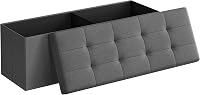
The SONGMICS bench is rectangular at 43 inches wide, 15 inches deep and 15 inches high. At that width it reads more like a shared bench or storage seat than a single footrest.
Hold each shape against your chair in the room before you decide. If it looks much wider than the chair, it will dominate the pair, and much smaller it can feel like an afterthought.
Firm rule: pick a round ottoman when floor space is under 6 feet of depth.
When does storage make a slipper chair footrest more useful?
Storage helps when blankets, books or remotes tend to pile up near the chair. A concealed compartment keeps the room tidy without adding a separate basket.
The SONGMICS bench offers 35 gallons of storage with a removable divider for books, blankets or larger items like bed sheets. It supports up to 660 lb, so it can also serve as seating or a storage chest.
The Amazon Basics round ottoman has a concealed compartment in a smaller footprint. It suits a reading corner for a throw or a book where bench length storage is not needed.
The ALASDO ottoman has 43 liters of storage in a 17 by 13 by 13 inch body. It folds to 17 by 13 by 2.5 inches, supports up to 400 lb, and can move between rooms or store under a bed.
Check how much room remains for padding on top, as a thin lid may feel less comfortable than a thicker foam cushion. If bedroom seating is part of your plan, compare Best Storage Ottomans for Bedrooms for scale and use at the foot of a bed.
Firm rule: buy storage only if you can name the items it will hold.
How do you use weight limits and build when choosing an ottoman?
Weight limits tell you how the ottoman can be used beyond foot resting. Match the stated limit to the planned job, and do not treat it as a promise for standing or climbing.
The SONGMICS bench states a 660 lb limit, built with MDF panels and metal corner guards on the lid. At 15 inches high and the longest of the three, it is a stronger choice for extra seating or storage beside a slipper chair.
The Amazon Basics ottoman states a 300 lb limit, with a wood frame and tapered legs. Its 17 inch height sits higher than the other two, so it may pair better with a slightly higher slipper chair seat.
The ALASDO ottoman states a 400 lb limit, with E1 MDF and a thicker sponge pad. At 13 inches high, it is the lowest of the three and may suit a very low chair.
Frame material also shapes feel. Wood legs give a lighter look and raise the ottoman off the floor, while a pedestal or panel base gives a more solid look.
Firm rule: choose the lowest ottoman that still meets your seating needs.
How should fabric and color match a slipper chair?
Color match starts with tone, not exact shade. Pick an ottoman in a neutral tone that sits in the same family as the chair fabric.
Beige, grey or linen tones can bridge many chair colors without forcing a perfect match. The Amazon Basics ottoman comes in beige with linen inspired fabric and button tufting.
The SONGMICS bench comes in dark grey with a linen look surface and tufting. The ALASDO ottoman comes in grey with linen fabric.
Texture matters in small rooms. A smooth linen look can keep a pair feeling light, while heavy texture can make the ottoman look larger.
If your slipper chair already has a strong pattern, a plain ottoman usually balances the pair. Care instructions differ by model.
The Amazon Basics ottoman says dry clean only. The ALASDO ottoman says wipe with a dry cloth.
For more storage shapes and fabric options, see Best Storage Ottomans for Living Rooms.
Firm rule: match tone and texture before you match exact color.
What are the trade-offs among these three ottomans for a slipper chair?
Each option below fits a different chair height and room size. Do not pick by score alone; pick by measured height and footprint.
The right ottoman is the one that aligns with your chair seat and your floor space.
SONGMICS 43.3 inch bench: long storage for wider rooms
This bench is the widest option, so it works best along a long wall or at the foot of a bed. Its 15 inch height suits low seating, and its 35 gallon volume gives real storage for blankets and books.
The trade-off is scale. At 43 inches wide, it may overwhelm a narrow slipper chair or a small corner.
It also folds for storage, which helps in guest rooms but adds a setup step you must repeat.
Amazon Basics round ottoman: compact round shape for reading corners
This round stool fits where a bench cannot. Its 17 inch height is the tallest of the three, so check your chair seat height before you choose it.
It suits a reading corner or a spot beside a sofa more than a very low chair.
The trade-off is storage size and height. The compartment is smaller than the bench, and the higher top may not match a low slipper chair.
Its button tufting and legs give it a lighter look than a solid bench.
ALASDO small ottoman: low foldable option for tight spaces
This is the smallest and lowest option. At 13 inches high, it can pair with a low slipper chair where taller ottomans would feel too high.
It folds flat for storage and sets up without tools.
The trade-off is surface size. At 17 inches long, it supports feet well but offers less room for extra seating.
Its grey linen fabric and sponge pad keep the look simple, but the top may feel firmer than a deep foam cushion.
If you want a larger round option for a different room, look at Best Large Round Ottomans. If you want a smaller round option, see Best Small Round Ottomans.
Those roundups help you scale up or down after you settle the chair height.
Firm rule: eliminate any ottoman more than 2 inches off your measured seat height.
How do you test a slipper chair with ottoman at home?
You can test the pair in your room with tape and a seat check. Mark the chair and ottoman positions on the floor, then sit and rest for a few minutes in your normal posture.
That short test reveals height, gap and traffic problems that photos cannot show. Tape both outlines, leave the gap you plan to use, and add a path for walking past the pair.
Sit on the chair and lift your feet onto the ottoman. Check that your knees do not press into the chair front and that your feet stay flat.
Stand up and sit down a few times to see if the ottoman slides or shifts. Try the pair at night as well as in daylight if the spot is used for reading, since lighting changes how fabric tones read together.
If storage is part of the plan, open the lid and place the items you expect to store. For a different storage shape to compare, check Best Rectangular Storage Ottomans.
Firm rule: keep the setup only if you can sit, rest and stand without moving the ottoman.
What setup and care steps help the pair last?
Setup starts with a level floor and a stable base. Place the ottoman on a flat surface and check that legs or panels sit evenly before you use it.
A wobble on a rug or uneven floor can make foot resting feel unsafe.
For folding models, insert the bottom panel fully and check that the lid closes flat. The SONGMICS bench sets up by inserting the bottom panel, and the ALASDO ottoman folds without tools.
Follow the included instructions for your exact model and keep them in a handy place.
Care depends on fabric and frame. Wipe linen look fabric with a dry cloth where the maker allows it, and follow dry clean only care where stated.
Vacuum the top and seams on a low setting to remove dust before it settles into the weave.
Keep storage lids closed when the ottoman is not in use. That protects the contents from dust and keeps the top shape intact.
If you use the ottoman as extra seating, stay within the stated weight limit and avoid standing on the lid.
Firm rule: follow the care label for your ottoman fabric, not a general rule.
How should you decide on a slipper chair with ottoman?
Decide by height, footprint and main use in that order. Pick the ottoman that matches your chair seat height, fits the taped floor outline and serves the job you named.
That order prevents a good-looking piece from failing in daily use.
If your slipper chair seat is near 15 inches high and you need long storage, the SONGMICS bench is the strongest match. If your seat is near 17 inches and you need a small round stool, the Amazon Basics ottoman fits.
If your seat is near 13 inches and space is tight, the ALASDO ottoman is the closest match.
Revisit the full ottoman buying guide if you feel unsure about type or scale. It gives you a checklist to run through before you order.
Then measure your chair again, tape the outline, and compare the three sizes against that outline.
A slipper chair with ottoman should feel like one seat from the moment you sit down. When height, width and firmness line up, the pair takes up less visual space and works harder in the room.
Measure first, then buy the ottoman that matches the chair you already have.
Frequently asked questions
What height should an ottoman be for a slipper chair?
Aim for an ottoman top that is level with, or no more than 2 inches below, the slipper chair seat height. This keeps your knees at about a 90 degree angle and avoids pressure behind your legs.
Measure the chair seat first, then measure the ottoman including its legs.
How wide should an ottoman be next to a slipper chair?
Choose an ottoman about as wide as the slipper chair seat, or slightly narrower for a tight space. A round ottoman can work if its diameter matches the chair width.
Leave a few inches on each side so the pair reads as a set in the room.
Can a storage ottoman work as a slipper chair footrest?
Yes, if its height and firmness suit foot resting and its weight limit suits your use. Storage ottomans add a place for blankets and books, but they may be firmer than a dedicated footstool.
Check the stated load limit and the foam or padding type before you use it for seating.
Should a slipper chair and ottoman match exactly?
They do not need to match exactly in fabric or color. Matching height, scale and tone usually looks more balanced than matching every detail.
A neutral ottoman can bridge a patterned chair, and a matching set can make a small corner feel calm and finished.