Leather vs Faux Leather Sofas: Which Should You Choose? (October 2026)
Choose genuine leather for natural aging and faux leather for a lower-cost, wipe-clean surface. Your room, care routine and budget help decide which leather or faux leather sofa is the better fit.
On this page (9 sections)
- Leather or faux leather sofa: what is the main difference?
- How do leather and faux leather compare in cost?
- Which material is easier to care for?
- Which material holds up better over time?
- What does each material feel like?
- Which sofa material suits your room and style?
- Which should you choose for your budget and routine?
- How can you compare sofas before buying?
- Final choice: leather or faux leather sofa?
Choose genuine leather if you want a natural surface that can develop a patina; choose faux leather if you want a typically lower-cost, easy-to-wipe option. For a leather or faux leather sofa, compare the exact material, care needs, construction and price before you decide.
Genuine leather comes from animal hide, while faux leather is made from synthetic or blended materials designed to look like leather. The surface, feel and aging pattern can differ, even when both sofas share a similar color and shape.


Leather or faux leather sofa: what is the main difference?
Genuine leather is hide, while faux leather is a manufactured covering. That difference affects feel, upkeep, appearance over time and often the initial cost.
Leather can show natural variation in grain and color. With use, it may soften and develop marks or a patina, which some owners like and others prefer to avoid.
Faux leather has a more uniform surface and is often easier to wipe clean. Its name covers several constructions, so don't assume every faux leather sofa has the same texture or durability.
For more detail on the material itself, see What Is Faux Leather Made Of? A Plain Answer.
Knowing whether a sofa uses PU, PVC or another surface helps you compare products more accurately.
What does “leather” mean on a sofa?
Check whether the sofa is described as genuine leather, bonded leather or faux leather. These terms refer to different materials, and a leather look alone does not confirm that a sofa uses hide.
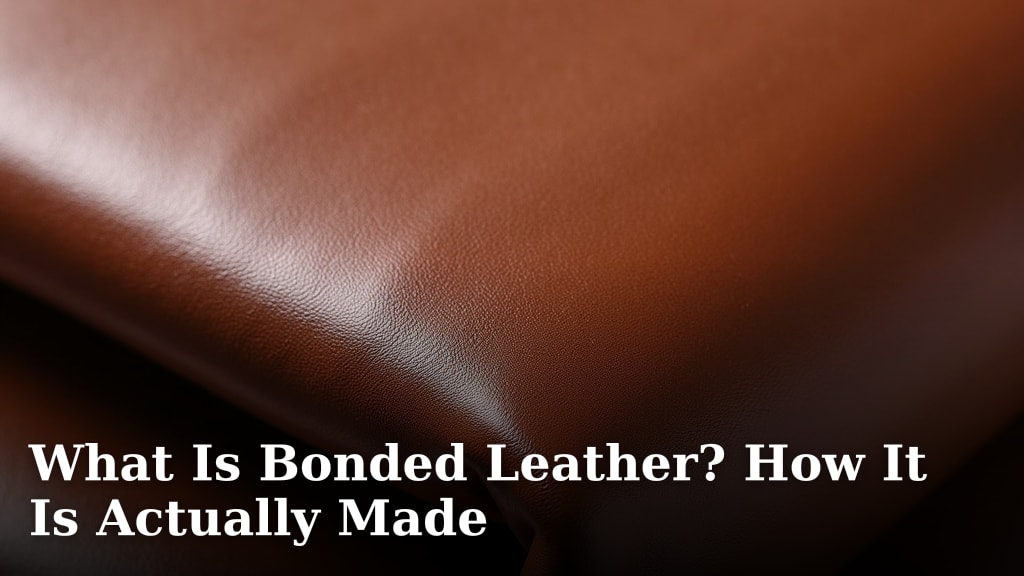
Bonded leather is made with leather fibers and binding materials.
It is not the same as a sofa upholstered in full sections of hide, so read the material description carefully. Our guide to what bonded leather is and how it is made explains why the label matters.
Faux leather can also be described as PU leather or synthetic leather. If the material label is vague, ask the seller what the upholstery is made from and which parts of the sofa it covers.
How do leather and faux leather compare in cost?
Faux leather is often the lower-cost starting point, while genuine leather sofas can cost more. Compare similar sizes, frame materials and features to make the price difference meaningful.
A compact futon and a large leather sectional are not a fair price comparison. Compare sofas with similar seating capacity, cushion construction and frame quality, then decide whether the natural hide is worth the extra cost to you.
Initial price is only one part of the decision. Care products, repairs and how soon you might replace a sofa can affect long-term value, but those costs depend on the specific sofa and your use.
If you want a range of faux leather shapes and styles, browse our guide to the best faux leather sofa options. Compare the dimensions and material description with your room before choosing a style.
Which material is easier to care for?
Faux leather is usually simpler for quick surface cleaning, while genuine leather can need care products made for leather. Follow the sofa maker's instructions for either material.
A damp cloth may be enough for some faux leather surfaces. Avoid harsh cleaners and scrubbing unless the care directions allow them, since the finish can vary from one sofa to another.
Leather care also depends on the finish. Dust regularly, wipe spills promptly and use a cleaner or conditioner only if the manufacturer recommends it for that sofa.
Both materials benefit from keeping food, ink and sharp objects away from the upholstery. A removable cushion cover can help with cleaning, but check whether it is washable before putting it in a machine.
What if you have children or pets?
Choose based on the messes and wear you expect, rather than assuming either material is spill-proof or scratch-proof. Removable covers and clear care directions can matter as much as the upholstery type.
Faux leather can be convenient when sticky marks need wiping away, but claws, repeated rubbing and sharp objects can still damage it. Genuine leather can also mark or scratch, and those marks may remain visible.
EASE MOOSE describes its faux leather as waterproof and scratch resistant under limited conditions. That does not make the surface immune to damage, so consider your pets' behavior and the sofa's care instructions.
Which material holds up better over time?
Durability depends on the upholstery grade, construction, use and care, so material name alone can't predict lifespan. Check the frame, cushions, seams and warranty as well as the surface.
Genuine leather can age in a way many buyers value, but it may show scratches, fading or stains. Faux leather can keep a consistent look at first, though some types may crack or peel with wear.
Pay attention to how much the sofa will be used. A main family sofa faces more sitting, friction and spills than a guest-room piece, so construction details matter.
Look at the frame and cushion design. A sturdy frame, well-made seams and cushions that suit your household can contribute to a better choice regardless of whether the sofa uses leather or faux leather.
What does each material feel like?
Genuine leather tends to feel more natural, while faux leather can feel smoother and more uniform. Feel varies by finish and quality, so try a sample or inspect a returnable sofa if texture matters to you.
Leather may feel cool at first and warm as it adjusts to body heat. It can also soften with use, although different leather finishes can feel quite different.
Faux leather often has a consistent finish and can be made to resemble several leather textures. Some surfaces feel slick, while others have more grain or texture.
Consider your climate and clothing, too. A smooth surface may feel sticky in warm weather, and a sofa you use for long lounging sessions should feel comfortable against skin and clothing.
Which sofa material suits your room and style?
Pick the color and finish that work with your room, then confirm the sofa's dimensions and material. Neither leather nor faux leather is limited to one decorating style.
Genuine leather often comes in warm browns and classic shapes, but it is also available in other colors and designs. Faux leather has a wide range of colors, textures and silhouettes, making it easier to match a particular look.
A white faux leather sofa can brighten a room but may show marks more clearly. See our guide to best white faux leather sofas for options and practical points to consider.
Before buying, measure the doorway, hall turns and available floor area. Include space for the sofa's arms, recline or bed conversion if it has those features.
Which should you choose for your budget and routine?
Choose leather for natural variation and aging; choose faux leather for a more uniform, often lower-cost surface that's easy to wipe. Your routine and tolerance for visible wear should guide the final choice.
Choose genuine leather if you value the feel and changing character of hide, and you're comfortable following its care directions. It may be a poor fit if you want a surface that stays uniform or don't want to manage scratches and marks.
Choose faux leather if ease of wiping and initial cost matter most. Check the exact upholstery type and look for clear information about cleaning, frame materials and cushion covers.
If you want a multi-use option, the Homall Black Faux Leather Futon Sofa Bed adjusts to 3 backrest positions and folds flat for sleeping.
For larger rooms where seating needs to change shape, the EASE MOOSE Leather Sectional Couch uses modular sections and removable cushions.
For a more traditional 3-seat sofa, the HULALA HOME 84" Faux Leather Sofa has camel upholstery, button-tufted cushions and metal legs.
For a black sofa with storage and charging features, the TYBOATLE 88'' Black Faux Leather Couch has USB ports and side pockets.
How can you compare sofas before buying?
Compare the same practical details across both materials: dimensions, frame, cushion covers, care directions and return terms. This makes it easier to separate upholstery preference from other differences.
Start with size and layout. A sofa that blocks a doorway or leaves too little walking space is a poor fit regardless of its material.
Then check the upholstery description, cushion construction and frame. If the sofa has removable covers, confirm whether they can be washed or only spot cleaned.
Think through a typical week: meals on the sofa, pets jumping up, children using it, or frequent guests. Your likely messes and wear patterns can make one material more practical for your home.
For table placement around your sofa, our guides to console table vs TV stand, sofa table vs console table and end table vs side table can help you plan the surrounding furniture. See end table sizes before choosing a table for a tight walkway.
Final choice: leather or faux leather sofa?
Pick genuine leather if you want hide's natural look and are comfortable with its care; pick faux leather if you prefer a more consistent surface and easy wipe-downs. Compare the exact sofa's construction and material details before you commit.
If you want the convenience of faux leather, start with the best faux leather sofa options. If natural aging and texture matter more, focus on the leather grade, finish and care directions for the sofa you're considering.
Frequently asked questions
Which lasts longer, leather or faux leather?
Neither material guarantees a longer-lasting sofa on its own. Genuine leather can develop a patina with use, while faux leather quality and wear vary by surface material, construction and care.
Check the maker's care guidance and warranty for the exact sofa, and inspect seams, cushions and frame details before buying.
Is faux leather cheaper than real leather?
Faux leather sofas are often positioned at a lower price than comparable genuine leather sofas, but prices vary by size, frame, brand and construction. Compare sofas with similar layouts and features, then consider expected care and replacement needs as part of the total cost.
Can you clean a faux leather sofa with water?
Follow the care directions for the exact sofa. Some faux leather sofas, including the HULALA HOME and TYBOATLE models here, can be wiped with a damp cloth; avoid assuming every surface tolerates the same cleaner or amount of moisture.
Does bonded leather count as genuine leather?
Bonded leather contains leather fibers combined with other materials, so it is different from a sofa upholstered in a continuous hide. Check how the material is described and ask what covers each surface.
Our guide to what bonded leather is explains the term.
Is faux leather a good choice if you have pets?
Faux leather may be practical for some pet homes because certain surfaces wipe clean, but scratch resistance depends on the material and the pet's habits. EASE MOOSE describes its faux leather as scratch resistant under limited conditions, so trim claws and follow its care instructions.